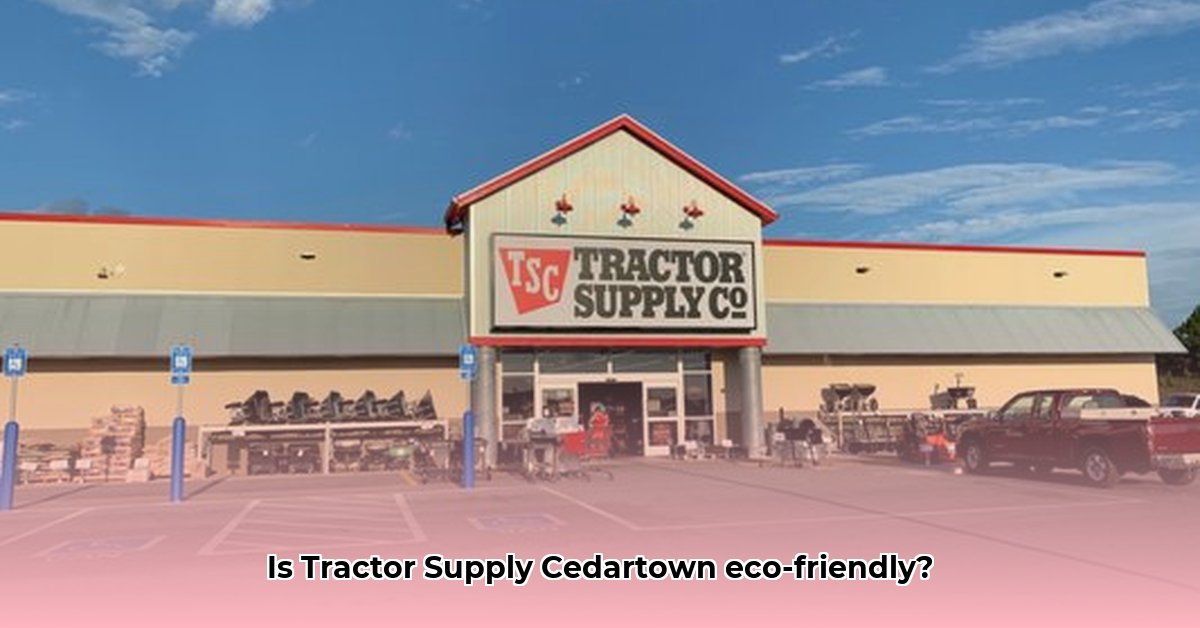
Tractor Supply's recent opening in Cedartown, Georgia, raises important questions about its potential impact on local farming practices and sustainability efforts. While the convenience of readily available supplies could benefit farmers, the extent to which this translates to more sustainable agriculture requires closer examination. This article explores the potential positive and negative effects, acknowledging current data limitations. For more on Tractor Supply's distribution, see their distribution center information.
Easier Access: A Boon for Sustainable Practices?
The arrival of Tractor Supply could significantly improve access to essential farming supplies for Cedartown's farmers. Reduced travel time and costs, particularly for bulky items like fertilizer and feed, could be substantial advantages. This increased efficiency could free up resources and time, potentially allowing farmers to explore and adopt more sustainable methods. However, this convenience alone does not guarantee a direct positive impact on sustainable farming practices.
Sustainable Product Availability: A Key Factor
The true measure of Tractor Supply's contribution to sustainable agriculture depends on the availability of eco-friendly products. The store's inventory of organic seeds, sustainable fertilizers, and water-efficient irrigation systems will directly influence local farmers' ability to adopt more sustainable practices. Without detailed knowledge of the Cedartown store's specific offerings, assessing its contribution to sustainable farming remains challenging. A comprehensive inventory analysis is needed.
Cost Considerations: Affordability and Adoption
Sustainable farming practices often involve higher upfront costs. Organic seeds, for instance, typically command a higher price than conventionally produced seeds. Tractor Supply's pricing strategy will be crucial in determining whether sustainable options are accessible to local farmers. Affordable pricing could significantly encourage adoption, while high prices could create an insurmountable barrier.
Beyond the Store: A Collaborative Approach
The future of sustainable farming in Cedartown depends on more than just Tractor Supply. Local government policies, financial incentives, and community-led initiatives all play a critical role. Supportive government programs focused on water-efficient irrigation or incentives for sustainable practices would amplify the potential positive impacts of Tractor Supply's presence.
Potential Impacts on Cedartown Stakeholders
The effect of Tractor Supply on sustainable farming in Cedartown will likely vary across different stakeholders:
| Stakeholder | Potential Positive Impacts | Potential Negative Impacts |
|---|---|---|
| Local Farmers | Increased accessibility to supplies, reduced transportation costs | Potentially higher prices for sustainable options, limited selection |
| Tractor Supply | Increased sales, enhanced community image | Limited market demand for sustainable products could influence purchasing decisions |
| Local Government | Economic growth stemming from increased agricultural productivity | Limited resources may hinder investment in sustainable farming initiatives |
Assessing Tractor Supply's True Impact: Data Gaps and Future Research
Currently, definitive conclusions regarding Tractor Supply's impact on sustainable farming in Cedartown are hampered by a lack of concrete data. Future research should include:
- Farmer Surveys: Assessing local farmers' usage of sustainable products and their experience with Tractor Supply.
- Product Inventory Audits: Quantifying the availability of sustainable farming supplies at the Cedartown location.
- Environmental Impact Analysis: Comparing pre- and post-Tractor Supply data on water and energy usage by local farms.
- Community Engagement Studies: Examining Tractor Supply's partnership with local organizations promoting sustainable agriculture.
Only with comprehensive data collection can we fully evaluate the extent to which Tractor Supply's presence in Cedartown contributes to sustainable agricultural practices. The potential is there, but further research is critically needed.